
What Is High-Density Mobile Shelving?
Definition and Core Concepts
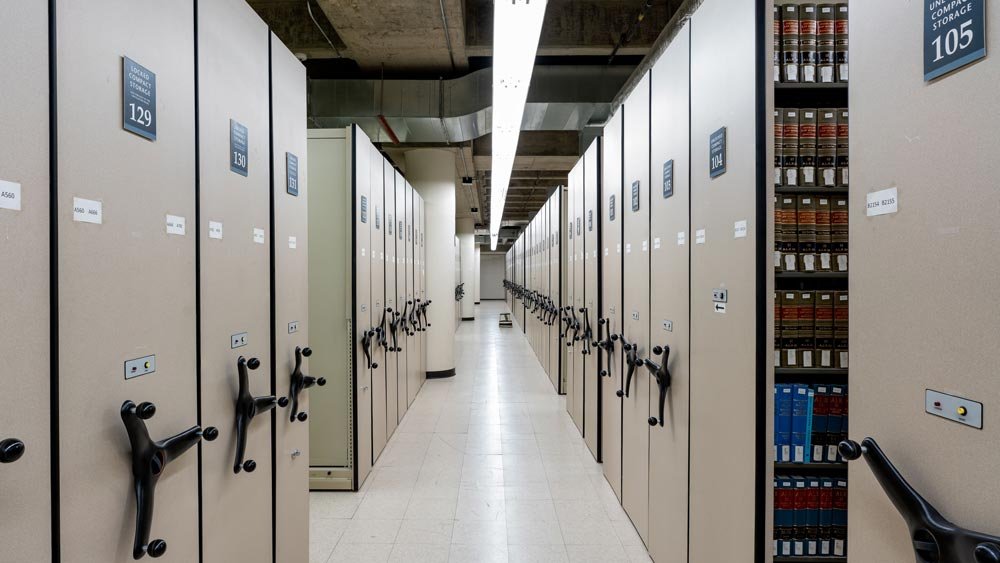
High-density mobile shelving—frequently referred to as mobile compactor racking or Compactus systems—mounts shelving units onto wheeled, movable carriages. Rather than being bolted permanently to the floor, these units slide horizontally along embedded rails. Whenever access is required, you open up a single aisle; when not in use, the units pack tightly together, virtually eliminating unused aisle space.
The core rationale behind this design is straightforward: standard warehouse setups assign a permanent aisle to every single row of shelving, leaving those pathways empty most of the time. Mobile shelving transforms aisles into dynamic spaces that open only on demand, converting former foot-traffic areas into functional storage capacity.
Key Differences from Static Shelving (Side-by-Side Comparison)
To help you visualize how these two approaches compare, here is a breakdown:
| Comparison Dimension | Static Shelving | High-Density Mobile Shelving |
| Aisle Requirements | Dedicated aisle for every row | Typically requires only 1–2 dynamic aisles |
| Space Utilization | Lower; aisles consume substantial floor area | Higher; boosts storage capacity by 50%–100% |
| Access Method | Direct access to all rows simultaneously | Requires opening the desired aisle first |
| Initial Investment | Lower upfront costs | Higher initial capital expenditure |
| Best Suited For | High-frequency access and fast-moving goods | Low-to-medium access frequency, high-density archives, and dense inventory |
In short: if your operations demand constant, high-volume throughput across all inventory, static shelving might suit you better. However, if your goal is to pack maximum inventory into a constrained footprint with lower access frequencies, mobile shelving delivers a clear advantage.
Essential Glossary (Carriage, Rail, Compactus, Mechanical Assist)
Before diving deeper into how the technology operates, here are key industry terms to keep in mind:
- Carriage: The mobile base mounted on tracks that supports the shelving racks and enables smooth lateral movement.
- Rail: The floor-anchored track guide system that directs carriage travel.
- Compactus: A widely used industry term for high-density mobile shelving, originally derived from a brand name.
- Mechanical Assist: A geared drive mechanism that allows operators to shift heavy loads with minimal physical exertion, commonly found in manual systems.
Grasping these terms will make it much easier to evaluate vendor proposals and navigate technical specifications.
How High-Density Mobile Shelving Works: A Detailed Breakdown
Base System: Rails and Carriages
The bedrock of any mobile shelving system consists of floor-embedded tracks coupled with mobile carriages attached beneath the shelving units. These rails are generally recessed into concrete flooring to distribute heavy structural loads evenly and keep carriage movement aligned without drifting off track.
Carriages utilize heavy-duty bearings or rollers, transmitting the total weight of the racks down through the rails and into the building foundation. While conceptually straightforward, this setup demands strict floor levelness and load-bearing capacities, which we will address later under installation standards.
Manual Drive Mechanisms: Gears, Ratios, and Ergonomics
Manual setups rely on human effort, but rather than shoving heavy racks directly, operators turn mechanical handwheels connected to gear assemblies. The gear ratios multiply human input force, turning modest hand rotation into significant lateral thrust capable of shifting entire carriage rows.
A well-engineered manual system balances effort reduction against mechanical speed: higher gear ratios reduce required physical effort but demand more wheel turns to cover the same distance. Ergonomic design is equally vital—handwheel height, rotational resistance, and accessible locking mechanisms directly impact daily user comfort and long-term health.
Powered Systems: Motors, Controls, and Safety Sensors
Powered configurations swap physical exertion for electric drive motors. Operators simply press a button or use a remote control to command the motors, moving the shelving smoothly along the tracks.
These powered setups typically consist of several essential elements:
- Drive Motors: Supply mechanical motion, sized according to total load weight and carriage run length.
- Control Panels: Range from basic push-buttons and touchscreens to wireless remotes.
- Safety Photoelectric Sensors: Detect human presence or obstacles inside active aisles, immediately halting movement upon detection.
- Emergency Stop Buttons: Allow manual shutdown at any time during operation.
Safety sensors represent a primary line of defense, making powered systems particularly suitable for high-traffic environments involving multiple team members.
Smart and Automated Systems: IoT Integration and AI Positioning
Smart systems build upon electric platforms by layering in Internet of Things (IoT) sensors and digital control software. They track aisle usage, interface directly with Warehouse Management Systems (WMS), and can even anticipate which aisle should open based on historical picking patterns.
Cutting-edge setups incorporate AI-driven positioning algorithms that dynamically reorganize stock configurations based on order streams, repositioning fast-moving items closer to access points to shave seconds off order picking. We will explore this further in the future trends section.
Load Distribution and Structural Engineering Principles
Designing a mobile shelving system is fundamentally an exercise in structural weight distribution. The mass of each shelving section must transfer evenly through the carriages down to the rails and subfloor. Uneven weight loading places excessive stress on local track segments, leading to rail deformation and structural hazards over extended use.
Consequently, structural engineers must calculate several key variables during planning:
- Maximum allowable load per linear meter
- Center of gravity under fully loaded conditions
- Dynamic movement forces (including starting/stopping inertial thrust alongside static loads)
This is why mobile systems cannot simply reuse standard static rack floor specifications and require dedicated structural assessments.
Types of High-Density Mobile Shelving Systems
Manual Mobile Shelving (Crank-Operated and Push-Pull)
This represents the foundational, most budget-friendly tier. Crank-operated models use rotating handwheels to drive gear trains, while push-pull versions rely directly on physical effort paired with light mechanical guides. They work best for tight budgets and low-frequency access demands.
Electric Mobile Shelving (Push-Button and Remote-Controlled)
Actuated via push-buttons or handheld remotes, these units save time and physical effort. They are ideally suited for heavy loads, long runs, or facilities requiring frequent aisle openings, making them the standard choice across mid-to-large warehousing projects.
Smart Mobile Shelving (Automated, Sensor-Integrated, Software-Linked)
Combining IoT telemetry, software platforms, and automated control logic, smart systems enable remote command, usage logging, and direct WMS synchronization. They fit facilities prioritizing digital management and future automation pathways.
Heavy-Duty Industrial Mobile Racking
Engineered specifically for bulky, massive assets such as industrial machinery parts, raw material coils, and heavy tooling dies. These systems utilize reinforced track channels, heavy-gauge carriages, and high-torque drive motors.
Specialized Systems (Artwork Racks, Cold-Storage Racks, Cantilevered Mobile Racks)
Tailored for specialized operational requirements:
- Artwork Storage Racks: Designed for museums and galleries with strict shock-absorption, dust protection, and climate control considerations.
- Cold-Storage Mobile Racks: Built for sub-zero temperatures using frost-resistant materials and low-temperature lubricants.
- Cantilevered Mobile Racks: Engineered for long, irregular items like piping, timber, and metal extrusions.
Quantifiable Benefits: Space, Cost, and Operational Efficiency
Storage Capacity Expansion: Real-World Gains (50% to 100% Increase)
The most immediate payoff of mobile shelving lies in density optimization. Empirical field data shows that retrofitting a given footprint with mobile units yields a 50% to 100% expansion in usable storage capacity, depending on baseline aisle ratios and vertical stack heights.
Put simply, if your current warehouse is bursting at the seams and triggering expansion plans, installing mobile shelving often costs far less than building or leasing additional square footage.
Floor Space ROI Framework
To evaluate whether the financial investment makes sense, consider this simple framework:
- Measure the active storage volume of your existing static system.
- Calculate the projected capacity achievable within that same square footage using mobile shelving.
- Monetize the net capacity gain by calculating saved rent, land acquisition, or facility construction costs.
- Compare these savings against total capital outlay for procurement and installation.
- Derive your target payback period.
Most organizations find the payback timeline considerably shorter than anticipated, particularly in high-rent urban logistics hubs.
Labor Efficiency and Reduced Picking Times
Beyond space conservation, mobile systems streamline labor productivity. Concentrating stock cuts down travel distances for warehouse pickers. When paired with strategic slotting in powered or smart setups, search and retrieval times drop significantly.
5-to-10 Year Total Cost of Ownership (TCO)
Focusing solely on purchase price can be misleading. A complete assessment accounts for maintenance, power consumption (for electric units), and replacement parts across a 5-to-10 year lifecycle. Over the long haul, high space density mitigates real estate expenses, giving mobile shelving superior overall cost efficiency compared to static racking.
Sustainability and Reduced Carbon Footprint
Squeezing more capacity out of existing real estate eliminates the need for facility expansion, directly curbing building material usage, HVAC energy draw, and construction-related carbon emissions. It serves as a practical, impactful lever for corporate ESG goals.
Safety Standards, Compliance, and Regulations
SEMA and BS EN 15635 Compliance Requirements
Before procuring a system, verify that equipment aligns with recognized standards such as SEMA (Storage Equipment Manufacturers’ Association) guidelines and BS EN 15635. These benchmarks establish structural integrity criteria, inspection schedules, and operational safety rules.
Fire Safety and Emergency Evacuation Codes
Denser storage introduces distinct fire safety requirements. Engineering plans must account for:
- Ensuring open aisle dimensions comply with egress and evacuation routes
- Integrating code-compliant overhead sprinkler coverage
- Verifying fire resistance ratings for structural components
These factors require careful review against local municipal fire codes rather than relying blindly on off-the-shelf vendor templates.
Load Capacity Placards and Safety Signage
Every unit should prominently display maximum load ratings, operational guidelines, and warning placards, ensuring personnel understand safe operating thresholds at a glance.
Operator Training and Protocols
Even the safest equipment poses risks if mishandled. Companies should deliver structured training covering:
- Core operating procedures
- Emergency stop activation protocols
- Fault identification and basic troubleshooting
- Prohibited actions (e.g., entering partially opened aisles)
Anti-Tip, Anti-Collision, and Overload Protection Systems
Modern electric and smart units come standard with integrated safety features: anti-tipping devices stabilize tall racks; anti-collision sensors stop movement near personnel or obstructions; and overload trips halt drive motors if weight limits are exceeded.
Industry-Specific Applications and Practical Scenarios
Healthcare and Medical Records Storage
Hospitals and clinics must archive voluminous medical files while maintaining strict regulatory compliance and audit readiness. Mobile shelving expands file room capacity within small footprints while keeping record retrieval quick and organized.
Legal, Financial, and Government Archives
Law firms, banking institutions, and municipal agencies handle massive volumes of hard-copy documents subject to mandatory retention periods. Mobile units secure these archives while reclaiming premium floor space in corporate offices.
Manufacturing and Industrial Parts Storage
Factory floors handle diverse spare parts and tooling components. Heavy-duty mobile racking holds high-tonnage items while minimizing storage footprint, freeing up floor space for production operations.
Retail and E-Commerce Fulfillment
E-commerce facilities manage broad SKU catalogs with dynamic turnaround. Integrating smart mobile racking with WMS platforms accelerates stock picking and replenishment workflows.
Museums, Libraries, and Heritage Preservation
Cultural repositories safeguard delicate artifacts and rare texts under strict environmental controls. Custom art-rack mobile systems maximize vault storage while preventing physical vibration and dust buildup.
Cold Storage and Temperature-Controlled Warehousing
Refrigerated square footage carries vastly higher construction and energy costs than ambient warehousing. Cold-spec mobile shelving employs cold-hardened alloys and specialized lubricants to deliver reliable operation under freezing conditions, driving maximum return on expensive cold space.
How to Select the Right High-Density Mobile Shelving System
Step 1: Conduct an Inventory Audit (SKU Profile, Access Frequency, Weight Profiles)
Before buying equipment, perform a thorough inventory evaluation to determine:
- Total SKU volume and diversity
- Access frequency (identifying fast-moving vs. slow-moving stock)
- Average weight and dimensional profiles
These findings directly indicate which system architecture will suit your operations best.
Step 2: Assess Flooring and Structural Building Conditions
Mobile shelving exerts concentrated loads. Hire a structural engineer to check:
- Concrete slab thickness and load rating
- Subfloor capacity under concentrated point loads
- Requirements for slab reinforcement or leveling topping
Step 3: Decision Matrix for Manual, Electric, and Smart Systems
Use this evaluation matrix to clarify your options:
| Decision Factors | Manual Systems | Electric Systems | Smart Systems |
| Budget | Entry-level | Moderate | High |
| Access Frequency | Low | Moderate to High | High |
| Operator Workforce | Small team, physical operation feasible | Multiple users, speed-oriented | High density, data-driven workflow |
| Expansion Potential | Limited | Moderate | High, easily integrated with automation |
Step 4: Vendor Checklist and Certification Verification
When selecting a vendor, verify:
- Industry credentials and certifications (e.g., SEMA membership)
- Availability of certified structural calculations
- Past project references and client case studies
- After-sales support, service agreements, and spare parts availability
Step 5: Plan for Future Scalability
Business requirements shift over time. Choose modular designs that allow manual bases to upgrade to motorized drives later, or select smart architectures capable of future WMS and robotic integration.
Installation Requirements and Best Practices
Floor Preparation: Concrete Depth, Leveling, and Reinforcement
Mobile systems place stricter demands on flooring than static racks, requiring deeper concrete slabs, tight leveling tolerances, and structural reinforcement. Engineering specifications should dictate exact subfloor modifications.
Track Installation: Alignment Tolerances and Joint Transitions
Precision during rail installation is critical; even minor misalignments cause wheel wear or carriage jamming over time. Rail joints must be ground perfectly smooth to ensure seamless carriage movement.
Electrical Wiring and Controls Integration
Electric and smart setups require careful wiring, control panel positioning, and sensor calibration. Licensed electricians and system integrators should perform this work to guarantee safety interlocks work reliably.
Load Testing and Commissioning
Before sign-off, run full load testing. Verify that carriages move smoothly under full rated capacity and confirm that safety stop mechanisms trip instantly when triggered.
Post-Installation Checklist
A final sign-off checklist should confirm:
- Rails are perfectly parallel and level
- Carriages travel smoothly without grinding noises
- Safety photoelectric sensors respond properly
- Weight capacity placards are clearly posted
- Emergency stop switches function as intended
- Operators have completed formal safety training
Maintenance, Troubleshooting, and Equipment Lifespan
Preventive Maintenance Schedule (Daily, Monthly, Annual)
Proactive upkeep ensures longevity. Follow this structured schedule:
| Maintenance Interval | Task Scope |
| Daily | Inspect travel paths for obstructions and listen for unusual noises |
| Monthly | Clean track channels and lubricate moving drive components |
| Annual | Conduct comprehensive structural, electrical, and safety sensor inspections |
Common Issues and Diagnostic Guide
Typical operational issues include sluggish movement, unusual grinding noises, or false sensor triggers. Most stem from debris in tracks, inadequate lubrication, or worn bearings. Persistent technical faults should be escalated to certified service technicians.
Component Lifespan and Replacement Cycles
Component lifespans vary: steel rails and structural carriages last for decades, while motors, relays, and optical sensors require routine testing and periodic replacement according to manufacturer service manuals.
When to Upgrade from Manual to Powered or Smart Systems
If staff report physical fatigue when turning cranks, or if daily picking frequency surges, upgrade signals are clear. Likewise, initiating digital warehouse transformations makes retrofitting smart controls highly cost-effective.
Future Trends in High-Density Mobile Shelving
Deep Integration with Warehouse Management Systems (WMS)
Next-generation systems integrate directly with WMS platforms, syncing slot locations in real time and logging inventory transactions automatically to remove human entry errors.
AI-Driven Slotting Optimization and Dynamic Aisle Management
Artificial intelligence algorithms evaluate order histories to dynamically adjust stock positions, placing high-velocity items in easy-reach zones to continually shorten picking travel distance.
Synergy with AGVs, AMRs, and Robotic Picking Systems
As Automated Guided Vehicles (AGVs) and Autonomous Mobile Robots (AMRs) spread across logistics hubs, mobile racking communicates with robotic fleets, opening assigned aisles automatically ahead of arriving picking bots.
Sustainable Materials and Eco-Friendly Innovations
Manufacturers are adopting recycled steel, eco-friendly coatings, and low-draw electric motors, steadily reducing environmental impact across the product lifecycle.
Frequently Asked Questions (FAQ)
How much space can high-density mobile shelving actually save?
Depending on layout and ceiling clearance, systems typically deliver a 50% to 100% boost in storage capacity compared to static layouts.
What is the typical load capacity of a single mobile shelving unit?
Capacities span a wide range—from tens of kilograms per shelf for light archival files to thousands of kilograms per bay for heavy industrial racking.
Can existing static shelving be retrofitted into a mobile system?
In many cases, yes. However, structural engineers must confirm that existing upright frames can mount safely to mobile carriages and that the floor slab can handle concentrated loads.
How long does installation typically take?
Timelines depend on project size and slab prep, ranging from a few days for compact office systems to several weeks for large-scale industrial installations.
What are the ongoing maintenance costs?
Manual setups require minimal maintenance, while powered and smart systems incur higher upkeep due to electrical components. However, these costs remain far lower than facility expansion.
Is high-density mobile shelving suitable for seismic zones?
Yes, provided the system is engineered with anti-tip locks and floor anchoring that comply with local seismic building codes. Dedicated structural engineering reviews are essential for these projects.