
Introduction: The Strategic Role of a Raw Material Warehouse in Modern Manufacturing
Defining the Raw Material Warehouse: More Than Just a Storage Space
As a plant manager, do you still view your raw material warehouse as just a static area for stacking supplies? In today’s lean manufacturing environments, this traditional mindset is often the root cause of poor operational efficiency. In reality, a raw material warehouse is far from being a mere cost center; it serves as the dynamic engine for the entire production line and a critical buffer for the supply chain. This space handles more than just the safe keeping of high-value cold-rolled steel coils, long profiles, and various precision parts—it acts as the vital hub that transforms static materials into an active production flow. A well-designed raw material warehouse ensures that production materials enter the processing line at the exact right moment and in optimal condition, eliminating unnecessary bottlenecks in internal logistics.
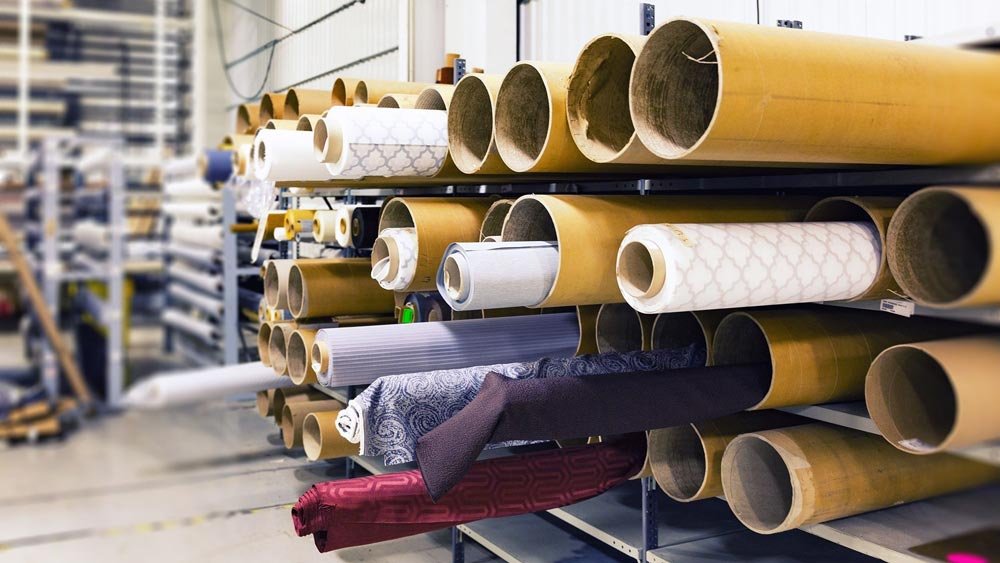
The Ripple Effect: How Raw Material Organization Impacts Your Bottom Line and JIT Production
The way raw materials are organized within a warehouse creates a massive ripple effect across your company’s profitability and Just-In-Time (JIT) manufacturing. In a highly synchronized JIT setting, any delay or picking error can halt the entire assembly line, racking up expensive downtime expenses. Furthermore, a poorly planned layout forces operators to waste valuable time navigating cluttered aisles. Studies indicate that in traditional manual picking operations, unproductive walking and searching can consume up to 60% to 70% of an entire shift. By implementing strategic warehouse planning and heavy-duty racking systems, you can drastically shorten material handling routes, cut carrying costs, and prevent material deterioration or damage caused by improper stacking—directly safeguarding your bottom-line profits.
Core Challenges in Managing a Raw Material Warehouse
Material Diversity: Handling Varied Shapes, Weights, and Storage Requirements
The primary hurdle in managing a raw material warehouse lies in the extreme diversity of material forms. Within your manufacturing facility, you might simultaneously store heavy castings weighing several tons, over-length profiles spanning several meters, easily rolling metal pipes, and boxes of small hardware fasteners. These materials vary dramatically in their geometric shapes, unit weights, and storage criteria. Mixing them together or stacking them blindly without a proper system not only wastes a tremendous amount of space but also risks bending or damaging the goods due to a lack of targeted structural support.
Inventory Inaccuracy and Its Threat to the Production Line
Inaccurate inventory data is a constant threat looming over the production line. In legacy warehouses that lack digital management systems and structured rack labeling, manual picking error rates for raw materials typically hover between 1% and 3%. This means that when the production floor urgently requires a specific specification of sheet metal or a particular batch of semi-finished goods, operators might find themselves searching aimlessly through a chaotic warehouse. Such production halts caused by inventory discrepancies disrupt manufacturing schedules, delay customer deliveries, and severely damage your business’s reputation.
Floor Space Optimization vs. Material Accessibility Violations
There is a classic trade-off between maximizing floor space utilization and maintaining material accessibility. To cram more supplies into a limited warehouse footprint, many facilities opt for excessively dense stacking. However, this approach usually comes at the expense of 100% direct accessibility. When you need to retrieve raw materials trapped at the bottom of a stack, workers have to move surrounding items first. This double-handling significantly drives up labor costs and reduces strict First-In, First-Out (FIFO) protocols to mere suggestions, increasing the likelihood of rust, corrosion, or material expiration.
Material Categorization: The First Step to Efficient Layout Design
To overcome these challenges, the first essential step is to classify the raw materials within the warehouse systematically and scientifically. By evaluating their physical characteristics and inventory turnover rates, you can pair them with the right racking and storage solutions.
| Material Category | Representative Examples | Core Warehousing Pain Points & Physical Constraints | Recommended Industrial Racking System |
| Heavy & Bulky Raw Materials | Steel coils, heavy steel plates, large castings | Extremely high concentrated loads; requires off-ground storage to prevent moisture absorption from the concrete floor, which causes bottom rust | Heavy-duty selective pallet racks, specialized coil racking |
| Over-Length & Irregular Profiles | Steel tubes, metal piping, timber, plastic extrusions | Excessive length makes standard pallet racks unusable; highly prone to physical sagging and bending deformations | Cantilever racking systems |
| Palletized Components & Semi-Finished Goods | Standard pallet assemblies, medium electromechanical parts, tote boxes | Mass amounts of SKUs with exceptionally high turnover frequencies; demands strict flexibility and direct accessibility for inbound/outbound flows | Heavy-duty selective pallet racks |
| Sensitive, Hazardous, or Temp-Controlled Materials | Cold-rolled steel coils, easily oxidized metals, specialty chemical intermediates | Highly vulnerable to temperature and humidity fluctuations; prone to “edge rust” from moisture; requires moisture-proof and anti-corrosion coatings | Heavy-duty anti-corrosion racks (hot-dip galvanized or special coatings) in climate-controlled zones |
| Small Hardware & Fast-Moving Consumables | Fasteners, screws, washers, small standard parts | Tiny individual footprints with a massive variety of SKUs; results in long manual picking paths and a high risk of inventory mix-ups | Industrial steel mezzanines, light-duty shelving systems |
Heavy and Bulky Raw Materials (Steel Coils, Plates, Castings)
Heavy and bulky materials feature intense concentration of loads, pushing the weight-bearing capacities of both the warehouse floor and the racking structure to their absolute limits. Take cold-rolled steel coils (CRC) as an example: because they lack the thick protective oxide scale found on hot-rolled coils, they are incredibly sensitive to ambient humidity and temperature changes. Placing cold-rolled coils directly onto a concrete floor is a recipe for disaster, as concrete continuously draws moisture from the ground, causing rapid oxidation and rust at the contact points. These materials must be stored elevated on heavy-duty steel structures outfitted with specialized cradles.
Long and Irregular Profiles (Pipes, Tubes, Timber, Extrusions)
Pipes, metal bars, and extruded profiles simply cannot fit within standard pallet units. Stacking them horizontally across the warehouse floor not only devours a massive amount of floor space but also unevenly distributes weight, causing the bottom layers to bend and warp. Once a profile suffers physical distortion, it will inevitably lead to equipment jams and defective finished products during subsequent high-precision cutting or welding processes.
Palletized Components and Semi-Finished Goods
Palletized parts and semi-finished products serve as the vital connective tissue linking different stages of manufacturing logistics. This material class is defined by a huge number of SKUs and an inbound/outbound rhythm tightly synchronized with Material Requirements Planning (MRP). To ensure the production line gets what it needs on demand, the racking design must guarantee absolute independence for every single pallet slot, eliminating the inefficient double-handling where moving one item requires shifting several others.
Sensitive, Hazardous, or Temperature-Controlled Intermediates
Sensitive raw materials or hazardous chemical intermediates demand strict climate controls, and their storage environments are frequently marked by high humidity, low temperatures, or mild acidity and alkalinity. In these harsh environments, standard steel rack coatings are highly vulnerable to peeling and oxidation. Failing to use steel treated with specialized anti-corrosion properties allows the load-bearing structure to silently erode over time, creating a major safety hazard for a catastrophic structural collapse.
Small Hardware and Fast-Moving Consumables (Hardware, Fasteners)
Screws, nuts, washers, and tiny electronic components carry low unit values, yet they often account for over 60% of the overall SKU count in manufacturing assemblies. Housing these miniature parts on heavy-duty pallet racks that are over a meter deep results in massive wasted vertical space and forces workers to waste time hunting for items due to poor visibility.
Engineering the Solution: Industrial Racking Systems Tailored for Raw Materials
As an industrial racking manufacturer, we have engineered and recommended five tailored storage systems designed for the unique physical properties of these material categories, helping you maximize warehouse capacity and achieve flawless production workflows.
Cantilever Racking Systems: The Gold Standard for Long and Irregular Materials
When it comes to handling long and awkwardly shaped raw materials, cantilever racking is globally recognized as the engineering gold standard.
- Open Access Face (No Front Columns): This design features only rear vertical columns, robust bases, and horizontal arms extending forward, completely eliminating any front column obstructions. This open configuration allows sideloaders or overhead factory cranes to directly retrieve over-length profiles horizontally, resolving the classic pain point where traditional pallet frames cannot accommodate extra-long items.
- Structural Steel vs. Roll-Formed Steel:
| Key Indicators | Structural Hot-Rolled Cantilever Racks | Roll-Formed Cantilever Racks |
| Capacity Per Arm | 1,500 lbs to 20,000+ lbs (approx. 680 kg to over 9 tons) | Under 1,500 lbs (typically hundreds of lbs up to 1,200 lbs) |
| Steel & Assembly Method | High-strength hot-rolled I-beams with fully bolted rigid connections | Light-gauge steel with clip-in or toolless pin connections |
| Forklift Impact Resistance | Exceptionally high; built to withstand heavy industrial wear-and-tear and aggressive loading | Standard; suited for light retail, furniture, or plastic products |
| Typical Applications | Steel pipes, heavy structural I-beams, large lumber bundles, metal castings | Plastic piping, lightweight profiles, motorcycle and parts display racks |
- Custom Engineering Core Metrics: Before tailoring your cantilever layout, our design team precisely evaluates four core dimensions:
- Load Depth: The actual front-to-back width of the material dictates the length of the cantilever arm. Material depth must never exceed arm length; any product overhang shifts the center of gravity outward, which can easily trigger a dangerous tipping accident.
- Load Height: The maximum height of the material bundle combined with the necessary safety clearance for forklift lifting determines the vertical adjustment increment along the column (typically adjusted in fine 150mm or 4-inch increments).
- Load Length: The overall length of the items defines the spacing or span between the vertical columns. For flexible, slender materials like copper piping or thin plastic tubes, column spacing must be tighter to offer more support points and prevent permanent sagging or warping under gravity.
- Load Weight: The total weight of a single bundle or individual piece directly dictates the gauge and thickness of the cantilever steel as well as the rigidity specifications of the base.
- Safety Warning: Modifying single-sided cantilever columns by adding arms to the rear face on your own is strictly prohibited. Even if the columns feature pre-punched holes, single-sided bases are not engineered to counterbalance a reverse tipping force. Adding unauthorized arms can cause the entire row of racks to instantly collapse backward, leading to a catastrophic failure.
Heavy-Duty Pallet Racks: Versatility for Massive and Diverse Manufacturing Loads
Heavy-duty selective pallet racks are the ultimate versatile workhorse for handling a high volume of diverse SKUs and various palletized raw materials.
- 100% Immediate Selectivity: Every single pallet beam layout faces the working aisle directly. Your forklift operators can pull any pallet of raw materials within seconds without shifting other inventory. This provides the essential structural foundation for executing efficient First-In, First-Out (FIFO) material rotation.
- Robust Structural Engineering: Our upright frames are manufactured from premium, high-strength Q235B grade cold-rolled or roll-formed steel, interconnected across spans using sturdy cold-formed box beams. The load capacity per level can be structurally reinforced between 1,000 kg and 5,000 kg depending on your operating conditions. Upright heights are highly customizable, ranging from 3 meters for low-ceiling structures to extreme heights of 12 to 30 meters for high-bay facilities.
- Versatility and Fall-Prevention Accessories: Beams feature micro-adjustments along a 50mm or 75mm pitch vertically. This allows you to reconfigure storage spacing in minutes without specialized tools if your material packaging sizes change. We strongly recommend installing hot-dip galvanized steel grating, timber supports, or wire mesh decking between the load beams. These add-ons help distribute pallet loads evenly and prevent loose parts, screws, or small components from falling through due to broken packaging, maximizing safety for personnel and machinery below.
Radio Shuttle and Drive-In Racks: High-Density Solutions for Uniform Batch Materials
When your facility requires bulk procurement and storage of uniform, high-volume raw materials (such as single-batch steel components, packaging cartons, or standard plastic resins), traditional pallet racks waste massive space on excess forklift aisles. In these scenarios, a radio shuttle system serves as the perfect mechanism to compress space and maximize density.
- Maximum Capacity Enhancement:
| Rack Type | Floor Space Utilization % | Forklift Aisle Space Required | Safety & Efficiency Assessment |
| Standard Selective Pallet Racks | 30% to 35% | High; requires dedicated turning and travel aisles between every rack row | High throughput, but severe aisle consumption leads to vulnerability toward warehouse congestion and unorganized stacking |
| Drive-In Racking | 60% to 70% | Low; forklifts must drive directly inside the narrow bays of the structure to stack loads | Lower efficiency; backing forklifts out and high-level stacking inside narrow lanes introduces high risks of frame impacts and structural damage |
| Radio Shuttle System | 80% to 90%+ | Exceptionally low; forklifts only require an interface aisle at one or both ends for picking/placement | Extremely high; forklifts stay out of the structure as autonomous shuttle cars travel back and forth within lanes up to 35 pallets deep |
- Semi-Automated Mechanics: The setup blends heavy-duty frameworks, high-precision guide rails, battery-powered radio shuttle cars, and conventional forklifts. Drivers simply use a wireless remote to send commands, and the shuttle car lifts and transports pallets along the rails at speeds approaching one meter per second. Outfitted with high-precision laser obstacle sensors and edge-positioning systems, the shuttle packs inventory tightly and smoothly into deep storage slots.
- Dual Support for FIFO and LIFO Protocols:
- LIFO (Last-In, First-Out) Setup: The system features an open aisle on one end only, meaning pallets enter and exit from the same side. This single-sided operation compresses aisles to the bare minimum, offering ultimate storage capacity ideal for uniform raw materials with zero expiration or degradation risks.
- FIFO (First-In, First-Out) Setup: Working aisles open up on both ends of the structure—one exclusively for inbound loading and the other for outbound retrieval. The shuttle picks up a pallet from the loading face and transfers it toward the exit. This provides flawless physical segregation and chronological rotation for batch-sensitive raw materials vulnerable to rust or degradation (such as premium coated sheet metal or chemical sealants).
Industrial Mezzanine Floor Systems: Utilizing Vertical Space for Sub-Assembly and Small Parts
If your facility features ample vertical height (such as a clear height between 5 and 10 meters) but suffers from a severe shortage of floor space, an industrial steel mezzanine system is the ultimate solution.
- The Magic of Multiplying Space: Leveraging high-strength structural I-beams and heavy dual-upright steel framing (such as 90x180x1.8 mm nested columns), this system constructs high-capacity intermediate work platforms right out of thin air within your existing footprint. This effectively increases your usable floor area by 200% to 400% without altering the building’s physical envelope.
- Dynamic Zoning and Workflow Redesign:
- Ground Level: Maintains clear spans and excellent overhead clearance for fast-paced forklift traffic, overhead crane hoisting, heavy coil storage, and bulk palletized raw materials.
- Mezzanine Level: Engineered to support heavy industrial capacities from 125 PSF (pounds per square foot) to well over 300 PSF. The upper level can house light-duty shelving for ultra-high-density storage of meticulous small parts and hardware, or be designated as a sub-assembly area, a quality assurance zone (QA), or a kitting area alongside the production flow. This vertical segmentation alleviates ground-floor congestion and positions secondary supplies immediately adjacent to assembly lines.
- Modular and Relocation Advantages: Our industrial platforms use a 100% bolted structural design, entirely avoiding on-site hot work or welding. This results in incredibly fast installations. Should your lease expire or your production layout shift in the future, the components can be completely dismantled and relocated to a new facility without structural loss, safeguarding your long-term capital investments.
Automated Storage and Retrieval Systems (AS/RS): The Future of Smart Material Feeding
In modern intelligent manufacturing plants aiming for flawless JIT parts feeding, Automated Storage and Retrieval Systems (AS/RS) are rapidly becoming an undeniable baseline standard.
- Streamlining Manual Labor and Boosting Accuracy: Traditional manual warehouse operations require forklift operators to frequently board/dismount trucks, search for storage locations, and manually cross-reference paperwork. This drives picking error rates up to 1-3% and causes significant updates delays. AS/RS utilizes ultra-tall, narrow-aisle racking structures paired with high-speed stacker cranes or shuttle fleets to implement automated “Goods-to-Person” retrieval. Operators simply wait at a fixed station, and the system automatically delivers the exact pallet required. This cuts unproductive walking time by over 60% and secures an overall fulfillment error rate of less than 0.1%.
- Eliminating Data Silos and Integrating with ERP/MES for Closed-Loop Feeding: The Warehouse Control Software (WCS) driving an AS/RS pairs seamlessly with Manufacturing Execution Systems (MES) and Enterprise Resource Planning (ERP). When assembly line sensors detect that materials at a specific station are running low, the MES triggers an automated replenishment ticket to the WMS. Stacker cranes react within microseconds, accurately pulling the designated pallet from its slot and routing it via conveyors, transfer shuttles, and line-side Autonomous Mobile Robots (AMRs) or AGVs directly to the machinery. This achieves digital, human-free, just-in-time material delivery, completely avoiding the nightmare of costly production shutdowns due to stockouts.
Strategic Layout and Operational Optimization inside the Raw Material Warehouse
Even the most flawless racking hardware requires intelligent layout algorithms and operational logic to unlock its true power. Let’s explore how strategic optimization brings energy and fluidity to your warehouse floor.
Zoning Strategies: Organizing by Turn Rate and Material Proximity to Production
Smart zoning configurations effectively minimize overlapping trajectories between forklifts and manual handlers, drastically accelerating overall turnover efficiency.
- ABC Inventory Analysis:
- Zone A (Hot/High-Frequency Zone): Reserved for fast-moving raw materials that represent only about 20% of the total SKU count but drive roughly 80% of daily outbound traffic. Situate these items on both sides of the main transit corridors closest to the production floor entrance or primary dispatch docks to shorten forklift travel distances to the minimum.
- Zone B (Warm/Medium-Frequency Zone): Houses components with average turnover rates, placed along the perimeter of the hot zone to function as a rotational buffer.
- Zone C (Cold/Strategic Stock Zone): Dedicated to slow-moving or bulky strategic reserves. Utilize heavy-duty, high-bay pallet racking to tuck these loads neatly away into the deepest corners of the warehouse or onto top rack levels, leaving precious ground floor space open for high-frequency operations.
- Vertical Golden Zone Picking: In manual picking setups, the vertical band between a worker’s waist and shoulders (or hips and shoulders) represents the most accessible and least tiring area to reach. Concentrating high-turnover screws and miniature components within this sweet spot—rather than on the ground level (requiring constant squatting) or high shelves (requiring ladders)—speeds up manual picking by over 15% while reducing workplace ergonomic strain and back injuries.
- Classic Material Flow Layout Designs:
| Flow Configuration | Core Characteristics & Material Path Description | Ideal Manufacturing Application |
| U-Shaped Configuration | Inbound receiving and outbound shipping docks sit side-by-side on the same side of the building, separated internally by a U-shaped storage and picking path. | Best for small-to-medium light manufacturing facilities; maximizes shared use of dock levelers and curbs personnel requirements. |
| L-Shaped Configuration | Receiving and shipping docks are positioned on adjacent walls, forcing material paths to pivot at a 90-degree angle. | Ideal for operations demanding strict physical separation between inbound and outbound flows to avoid material mix-ups, or buildings restricted by specific architectural shapes. |
| Straight-Through Layout | Receiving is located on one extreme end (e.g., front/left) and shipping feeds directly into the factory on the opposite extreme end (e.g., rear/right), sending materials along a single, unidirectional path with zero cross-traffic. | Perfectly fits heavy industries or massive assembly plants dealing with relentless, high-volume bulk raw materials moving in a single clear direction. |
Inventory Flow Control: Implementing Strict FIFO vs. LIFO Protocols
For raw materials highly vulnerable to degradation from atmospheric humidity—such as cold-rolled steel coils prone to oxidation, or specialized adhesives and lubricants with strict chemical shelf lives—First-In, First-Out (FIFO) is a completely non-negotiable directive. Although cold-rolled steel leaves the mill with a fine coat of rust-preventative oil, prolonged storage even in dry indoor facilities allows ambient moisture to slowly compromise the film, inducing “edge rust.” Utilizing strict lane rotation on heavy pallet racks or gravity-fed flow tracks forces older inventory to clear out toward the production floor first, completely eliminating material waste and degradation caused by stagnant backlog.
Leveraging Technology: Barcoding, RFID, and WMS Integration
Modern raw material hubs must completely abandon legacy workflows dependent on paper tickets or the tribal knowledge of veteran warehouse staff. By rolling out unique barcode or Radio Frequency Identification (RFID) tagging, every piece of incoming material receives a distinct digital identity the second it crosses the threshold.
- Intelligent Directed Putaway: When a forklift operator scans an incoming pallet code, the WMS evaluates the item’s ABC velocity and footprint parameters to automatically assign a specific rack location (e.g., “Zone A, Aisle 03, Bay 04, Level 02”) on their handheld terminal. This eliminates arbitrary dumping by drivers, ensuring every raw asset resides in its optimal home.
- Real-Time Data Synchronization: The WMS automatically captures every single inbound entry, bin transfer, pick run, and outbound shipment. This data updates your central ERP in microseconds, allowing procurement teams and production schedulers to access exact days-of-supply counts and material balances to make smarter supply chain calls.
Safety and Compliance Standards for Heavy-Duty Raw Material Storage
Because raw material warehouses consolidate tons of dense steel elements, heavy plates, and structural profiles, any racking failure or product fall can trigger devastating consequences.
Adhering to RMI (Rack Manufacturers Institute) and OSHA Standards
Professional racking manufacturers treat internationally recognized safety codes as non-negotiable baseline parameters during engineering and fabrication phases.
- ANSI MH16.1 (RMI Specification): This stands as the global gold standard for structural engineering of industrial steel storage racks. It establishes precise engineering limits for upright wall thickness, tensile strength, maximum allowable deflection for beams under concentrated loads (capping bend limits at 1/180 of the beam span), and seismic mechanical considerations in earthquake-prone zones, guaranteeing that frameworks retain reliable elastoplastic resistance under maximum stress.
- OSHA 1926.250 Compliance: This mandate dictates that all heavy-duty high-tier stacking must be secured with physical locking mechanisms to prevent tipping; travel aisles must remain unobstructed and free from hazardous stacking. Furthermore, it outlines strict rules regarding base anchorings:
- Mandatory Base Anchoring: The foot of every heavy-duty load-bearing column must feature dual-hole widened baseplates, rigidly anchored vertically into the concrete floor using heavy-duty expansion anchor bolts to prevent any structural displacement under equipment impacts.
- Shimming Thresholds: Since industrial concrete slabs frequently exhibit subtle leveling variations, installers can use steel shims underneath the baseplates to adjust frame plumbness. However, total shimming height must never exceed 6 times the diameter of the anchor bolt used. When shim thickness ranges between 2 to 6 times the anchor diameter and fewer than 2 anchor bolts are present, these plates must be rigidly interlocked or welded together on-site to stop them from vibrating free and causing frame lean under daily operations.
- Safety Lock Clips: Every beam-to-column connector engagement must feature a stainless-steel safety clip or lock pin. These locking components must withstand a vertical upward force of at least 1,000 lbs (approx. 450 kg), ensuring that if a forklift operator accidentally upward-strikes a beam during high-tier work due to visibility blind spots, the beam will never disengage and drop.
Weight Capacity Labeling and Load Distribution Integrity
Safety is not a vague abstract concept; it must be precisely quantified and strictly enforced on the floor.
- Large Load Plaques: In strict accordance with RMI regulations, the prominent end of every racking row must display a permanent metal or rigid PVC load capacity sign measuring no less than 50 square inches (approx. 322 cm²). This plaque clearly states the engineered load profiles directly to forklift drivers and supervisors. It must explicitly print:
- Maximum Uniformly Distributed Load Per Level: Defining weight caps for standard or customized pallet configurations on each beam pair.
- Maximum Total Load Per Bay: Re-emphasizing that because upright capacity is bound by high-tier loading moments, total bay capacity is never a simple addition of individual level capacities.
- Original Designed Beam Spacing: Because an upright’s resistance to buckling heavily depends on its maximum vertical unsupported span, the plaque must explicitly list allowed beam heights. If floor workers raise a beam level by several inches without structural engineering verification from the manufacturer to fit taller items, they increase the unsupported buckling length of the frame. This exponentially degrades the column’s vertical safety threshold, threatening localized shear yielding and a sudden structural collapse.
Installing Structural Protections: Column Guards, Barrier Rails, and Mesh Decking
In heavy industrial material hubs, heavy forklift traffic moving through high-speed backing runs and tight turns represents the number one killer of rack lifespan and the leading incubator for workplace accidents. Because of this, installing a comprehensive suite of heavy-duty physical guarding components is not an elective luxury—it is an absolute necessity:
- Heavy-Duty Column Protectors: Anchored around the foot of every single upright column, these guards are formed from thick curved steel or high-rebound polyurethane, secured independently into the slab with chemical anchors. When forklift outriggers side-swipe a frame, the shield completely absorbs the kinetic energy, shielding the upright steel from structural denting or bending failures.
- End of Aisle Barrier Rails: Installed across the exposed ends of every rack row—especially around aisle entries and high-traffic turning radiuses—these long, highly visible safety-yellow heavy steel structural rails create an impenetrable physical baseline. Even if a multi-ton forklift loses traction and skids forward, it impacts the guardrail directly, completely isolating the rack structures from mechanical force.
- Anti-Drop Mesh Netting & Decking: For high-tier racks, high-tensile wire mesh panels or heavy-duty plastic containment netting should be installed on the rear faces. This stops materials from being pushed off the back by over-accelerating forklifts during placement runs, keeping pedestrians in adjacent aisles entirely safe.
Conclusion: Transform Your Raw Material Warehouse into a Competitive Advantage
Summary of Key Takeaways for Factory Managers and Warehouse Planners
Raw material warehouse management acts as a severe test of a factory’s structural engineering and precise administrative capabilities. Reviewing this comprehensive breakdown, smart operations managers and facility designers must capture four essential pillars:
- Physical Classification as the Foundation: Over-length profiles, heavy steel coils, palletized semi-finished units, and tiny hardware pieces must be paired with industrial racking setups that precisely complement their physical geometry.
- Space Compression as the Profit Engine: Deploying radio shuttle systems and industrial steel mezzanines leverages vertical clearance to achieve stunning floor-space efficiencies above 80%, slashing long-term real estate costs and operational energy overhead.
- Technological Synergy as the Accelerator: Integrating WMS tracking, barcode workflows, and automated AS/RS systems cuts manual travel time by over 60%, fueling a highly accurate, automated JIT material feeding engine that never risks a stockout.
- Safety Compliance as the Baseline: Strict adherence to RMI and OSHA protocols regarding base anchoring, capacity plaque postings, and heavy guarding accessories represents a non-negotiable compliance floor for any top-tier manufacturing firm.
Partnering with a Specialized Rack Manufacturer for Customized Facility Design
Amidst the manufacturing push to drive down costs and optimize output, many businesses initially attempt to procure generic, low-cost standard shelves to get by. However, given that non-standard raw assets display highly unique geometric profiles, mismatched centers of gravity, and intensely concentrated point-loads, a truly “one-size-fits-all generic shelf” simply does not exist. Relying on improper frameworks fails to reclaim space and introduces serious structural imbalances. Over years of heavy forklift wear and off-center loading, these errors build up into silent, devastating safety liabilities.
Partnering closely with a specialized industrial rack manufacturer that possesses robust R&D capabilities, strictly respects global RMI mechanical standards, and delivers full turn-key facility design services is your single best path forward. Our professional engineering team dives deep into your facility floor, reviewing concrete slab profiles, load PSI limits, overhead clearances, and unique material footprints. Utilizing ANSYS structural modeling and localized seismic data analysis, we build custom spatial layouts and rigorous structural blueprints. We don’t just manufacture steel frames; we forge a golden channel toward extreme floor capacity and effortless manufacturing flows. If you are preparing to overhaul an existing facility or design a new plant footprint, reach out to our expert consultants today. Let’s collaborate to turn your raw material warehouse into a high-efficiency competitive asset that dominates the market!