
Against the backdrop of today’s highly volatile global trade landscape, logistics is no longer just a back-end support function; it has become a core driver that determines whether a business can survive fierce competition and achieve scalable expansion. As a manufacturer of warehouse racking, I have engaged in deep discussions with countless clients and observed a recurring “growth trap.” When order volumes double and SKU (Stock Keeping Unit) counts skyrocket, the traditional approach—simply hiring more laborers or renting more floor space—often leads to spiraling operational costs and missed market opportunities due to efficiency bottlenecks.
As we move through 2026, the logistics industry is undergoing a total transformation from being “sweat-driven” to “smart-driven.” In this shift, a specialized player—the Warehouse System Integrator—is moving from the wings to center stage, acting as the “master link” between complex technology and business objectives. This guide explores why integrators are the linchpin for scalable growth and reveals how to transform your logistics hub into a strategic asset through system integration in the era of smart warehousing.
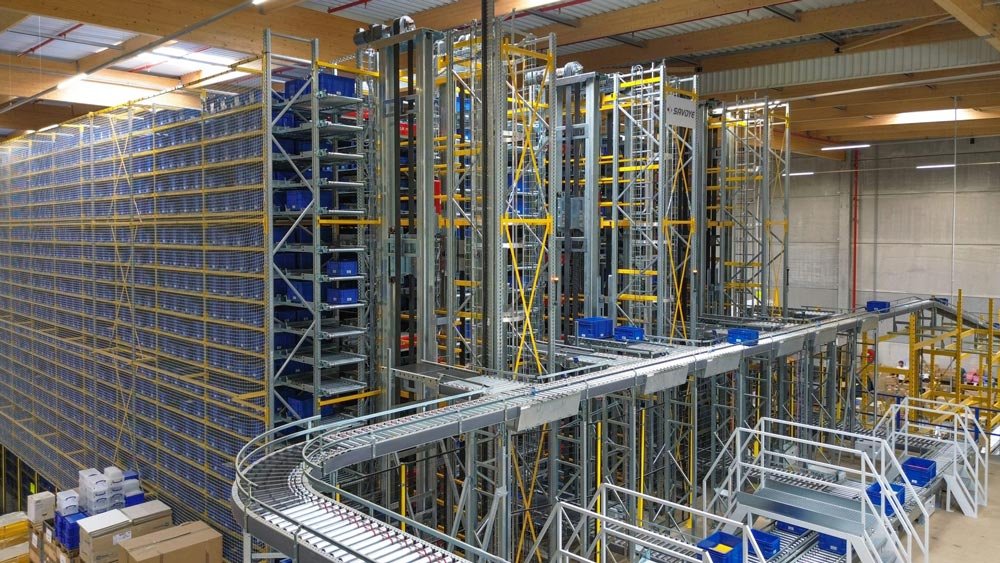
What Exactly Are Warehouse System Integrators?
Before diving into deep-level strategies, it is essential to define what a warehouse system integrator actually does. In short, they are the “chief architects” and “general contractors” of the warehouse automation ecosystem. They might not manufacture every single shuttle or rack, but they possess the specialized expertise to fuse hundreds of independent components into a high-performance, cohesive whole.
Defining the Core Role of a Warehouse Integrator
A warehouse system integrator is a professional engineering entity whose mission is to design, procure, install, and optimize a comprehensive automation solution tailored to a client’s specific business goals. In a modern fulfillment center, you might see palletizers from Supplier A, conveyors from Supplier B, a cloud-based Warehouse Management System (WMS), and high-precision racking from our own production line. Without an integrator, these devices would behave like a group of individuals who speak different languages and refuse to cooperate.
The true value of an integrator lies in their role as a “single point of responsibility.” This means that from initial requirement gathering and system simulation (Digital Twin) to hardware integration, software interfacing, final commissioning, and long-term after-sales support, you only deal with one partner. This end-to-end service model significantly reduces coordination risks and accelerates the system’s go-live cycle.
System Integrators vs. Original Equipment Manufacturers (OEMs): What’s the Difference?
During the decision-making process, many users struggle with a common dilemma: should they go directly to an OEM that manufactures forklifts or shuttles, or hire a system integrator? Understanding the fundamental differences between the two is the first step toward a successful investment.
| Comparison Dimension | Original Equipment Manufacturer (OEM) | System Integrator (SI) |
| Professional Depth | Focused on the performance of specific hardware or a single technology. | Focused on the cross-system fusion of various technologies and brands. |
| Technical Stance | Likely to push their own “all-in-one” product suite. | Brand-neutral; selects the best components based on actual needs. |
| Project Scope | Best for single-device upgrades or local functional additions. | Ideal for full-facility automation, greenfield projects, or complex integrations. |
| Accountability Boundary | Only responsible for the functionality and quality of their own equipment. | Responsible for the overall output and efficiency metrics of the entire system. |
| Control Logic | Possesses deep proprietary tech at the hardware level. | Excels at logical orchestration via higher-level software (WES/WCS). |
From a structural perspective, OEMs are primarily “product-driven.” They know their machines better than anyone, and for highly specialized, standalone processes (such as ultra-high-speed stacker cranes or precision cold-chain packaging), direct OEM support is irreplaceable. However, OEMs often lack the incentive to ensure compatibility with third-party equipment and may even have competitive exclusions.
In contrast, integrators are “solution-driven.” They act like conductors, ensuring that the violins (racking) and the piano (software) resonate in harmony. When your project involves multi-brand integration or requires a new system to interface seamlessly with an existing ERP (Enterprise Resource Planning) platform, an integrator saves you significant long-term maintenance costs and troubleshooting time through neutral selection and robust custom development.
Why Is System Integration a Non-Negotiable for Businesses in 2026?
At this juncture in 2026, the challenges facing the logistics industry have fundamentally changed. In the past, automation was seen as a “nice-to-have” competitive edge; today, it is a “must-have” for survival.
Breaking Down Data Silos: The Synergy of WMS, WCS, and WES
In a non-integrated environment, data often exists in a state of “disconnection.” The WMS knows where the goods are, but it doesn’t know if the conveyor line is currently overloaded. The WCS (Warehouse Control System) knows a shuttle is moving, but it doesn’t know if the priority of that cargo has changed due to an urgent email.
One of an integrator’s core contributions is eliminating these data silos by building a three-tier software architecture:
- Warehouse Management System (WMS): The global “brain” handling inventory accuracy, order releases, and macro strategies.
- Warehouse Execution System (WES): The real-time “heart” that dynamically allocates resources and balances workloads between human workers and automated machines.
- Warehouse Control System (WCS): The “nerve endings” that translate instructions into PLC (Programmable Logic Controller) code to drive physical hardware.
This trinity of synergy gives a warehouse “adaptive capabilities.” If a node fails, the integrated software can automatically reroute tasks via the WES, ensuring overall throughput remains unaffected. This level of resilience is unthinkable in a manual warehouse or a simple stack of hardware.
Navigating Labor Scarcity and Rising Operational Costs
The labor crisis is no longer a prediction; it is a hard business reality. Research indicates that by 2027, the labor gap in the US warehousing industry alone will reach 400,000 positions. Even more pressing, average wages in global logistics rose by 7% to 9% between 2024 and 2026, directly eating into corporate profits.
Integrated systems solve this by shifting humans from “movers” to “supervisors.” Automated systems like ASRS (Automated Storage and Retrieval Systems) or AMRs (Autonomous Mobile Robots) can boost picking efficiency by 200% to 300%, allowing you to handle more orders with fewer staff. Furthermore, by introducing collaborative robots (cobots), integrators improve ergonomics and reduce injury risks from heavy lifting, thereby lowering turnover costs and insurance premiums.
The Essential Path to Faster Fulfillment and Higher Accuracy
In today’s world of deepening e-commerce penetration, customer expectations for “next-day” or even “same-hour” delivery have become the norm. Manual warehouses, which rely on paper slips and human memory, often maintain error rates around 2%. For a company shipping 1 million orders annually, that translates to 20,000 errors. If the cost of handling each return or complaint is $50, the potential annual loss hits $1 million.
Integrators deploy technologies like pick-to-light or voice picking to push fulfillment accuracy above 99.9%. More importantly, by optimizing pick paths through algorithms, integrated systems significantly shorten fulfillment cycles, enabling your business to maintain stable Service Level Agreements (SLAs) even during sudden peak seasons like Black Friday.
Primary Types of Warehouse System Integrators
Before choosing a partner, you must identify the different “DNA” of integrators in the market to ensure their expertise aligns with your core pain points.
Consulting-Focused Integrators
These partners typically don’t own factories or sell their own brand of hardware. Their strength lies in “top-level design.” In the early stages of a project, they dive deep into your historical order data, use complex modeling tools to predict future growth curves, and provide multiple technical roadmaps for comparison.
Consulting-focused integrators serve as ideal independent advisors, helping you strike a rational balance between ASRS, AMR, or traditional racking. Their deliverables are usually detailed functional specifications and ROI projections that form a scientific foundation for major capital expenditures (CAPEX).
Software-Centric Integrators
With the arrival of the “Software-Defined Warehouse” era, these integrators have become increasingly critical in 2026. Their core competency lies not in steel structures but in their proprietary WMS/WES platforms.
If your existing warehouse already has plenty of automated hardware that doesn’t “talk” to each other—resulting in efficiency bottlenecks—a software-driven integrator is your best bet. They excel at developing complex API (Application Programming Interface) connectors to unify fragmented systems into a Digital Twin-driven smart facility.
Hardware-Rooted Integrators (Material Handling & Racking Specialists)
These integrators often originate from the material handling equipment or racking manufacturing sectors. As a racking manufacturer, we know that physical structure is the “bedrock” of any system. These integrators provide “physical integration” services, understanding not just how to install a rack, but how to embed complex conveyors and shuttle systems into a steel framework.
When dealing with heavy, bulky, or specialized materials (such as construction supplies over 6 meters long or molds exceeding 5 tons), hardware-rooted integrators have a significant edge. They approach the project from the perspective of structural mechanics and physical flow, ensuring the system doesn’t shut down due to minor racking deformations under high-frequency operation.
Core Components: The Seamless Marriage of Physical Storage and Automation
As racking experts, we must correct a common misconception: a rack is not just a “metal shelf.” In an automated integration project, the racking is the skeleton of the entire system, and its precision directly determines whether expensive robots can function properly.
Racking Systems: The High-Precision “Skeleton” of an Automated Warehouse
In a modern automated warehouse, racking is no longer a static storage unit. It must meet extremely high precision standards to accommodate high-speed stacker cranes or shuttles.
| Technical Specs | Traditional Manual Racking | Automated High-Precision Racking |
| Height Limits | Typically 6-10 meters | Can reach 30-45 meters (High-bay systems) |
| Dimensional Tolerance | ± 5-10 mm | Must be controlled within ± 1.5-3 mm |
| Deflection Control | Minor visible bending allowed | Strictly calculated to prevent sensor errors or collisions |
| Flooring Requirements | Standard concrete | Super flat floor |
| Maintenance Cycle | Low | Requires regular laser calibration and torque checks |
The importance of this “skeleton” is further highlighted in 2026. If a beam is off by just a few millimeters, a high-speed shuttle might fail to sense a storage position and trigger an error, causing a full line stoppage. Therefore, when selecting a racking supplier, integrators must verify compliance with rigorous standards like RMI (Rack Manufacturers Institute) or FEM (European Federation of Materials Handling).
The Integration Logic Behind Conveyors and Sorting Systems
Conveyors are the “arteries” of a warehouse. An integrator’s task is not just to connect Point A to Point B, but to implement real-time flow monitoring through WCS logic. Modern sorting systems (such as cross-belt or shoe sorters) can process tens of thousands of items per hour.
Deep integration is reflected in:
- Merging Logic: Ensuring that cargo flows from different floors do not collide on the main trunk line.
- Exception Handling: If a scanner fails to read a barcode, the system must automatically divert the item to a manual review area without slowing down the rest of the line.
Embedding Robotics (AMR/AGV) Into Existing Operations
A major trend in 2026 is “flexible automation.” Unlike expensive fixed-track systems, AMRs (Autonomous Mobile Robots) do not require magnetic strips or reflectors. Integrators use multi-agent scheduling algorithms to allow AMRs to navigate racks and find optimal paths based on real-time order flow.
For growing businesses, the beauty of this integration is its “scalability.” You can run 10 robots during the off-season and temporarily ramp up to 50 during the holiday rush via a RaaS (Robotics-as-a-Service) model without needing any physical modifications to your racking structure.
How to Choose the Right Warehouse System Integrator for Your Needs
This is a decision that will define your company’s competitiveness for the next decade. When selecting an integrator, you need to look past the sales brochures and focus on four core dimensions.
Evaluating Technical Compatibility and Open API Architecture
In 2026, no system you buy should be a “closed island.” A great integrator should embrace an open ecosystem. This means their WES/WCS should support seamless interfacing with major WMS and ERP platforms like SAP, Oracle, or Microsoft Dynamics. During evaluation, ask if they provide standardized RESTful API interfaces and inquire about their ability to handle large-scale, real-time concurrent data with sub-second latency.
Assessing Industry Track Records and Vertical Expertise
Logistics logic varies wildly across different verticals. Fresh food requires FIFO (First-In, First-Out) and precision temperature control; fashion retail involves massive reverse logistics for returns; and pharmaceuticals require extreme batch traceability.
Always conduct site visits to see the integrator’s real-world cases in your specific industry. Check how they handle your unique SKU shapes, weights, and peak volume surges. An integrator who understands your industry can save you months of “process learning” time.
Vetting Post-Launch Support and Long-Term Maintenance
Go-live is just the start of a long-distance run. In 2026, you need a “zero-downtime” commitment. A top-tier integrator should offer:
- Remote Predictive Maintenance: Using IoT sensors to monitor motor vibration and temperature, issuing alerts a week before a failure occurs.
- Localized Response: Can their technical team reach your site within 4 hours?
- Spare Parts Management: Do they maintain a local inventory of core components like PLC modules and critical sensors?
Cost and ROI Projections: Steering Clear of Hidden Fees
Many users discover too late that the initial quote didn’t cover floor remediation, network capacity upgrades, or fire sprinkler modifications. To avoid these traps, an integrator should provide a transparent TCO (Total Cost of Ownership) model.
| Cost Category | Potential Hidden Items | Suggested Countermeasures |
| Infrastructure | Floor levelness, power expansion, fiber laying | Professional ground-penetrating radar surveys during design |
| Compliance | Local fire codes for high-density storage | Include the integrator in the fire plan approval process |
| Software Licensing | Per-device fees, API call limits | Opt for tiered licensing or buyout models |
| Training & Validation | Retraining after staff turnover, safety testing | Include detailed manuals and validation periods in the contract |
True ROI calculations shouldn’t just look at labor savings; they must consider the “Cost of Doing Nothing.” If you lose a major client because of system inefficiency, that cost will far outweigh the investment in automation.
A Roadmap to Successful Warehouse Integration Projects
A successful integration project isn’t “bought”; it’s “forged.” Integrators typically follow a rigorous roadmap.
Phase 1: Requirement Analysis and Deep Data Mining
This is the project’s foundation. The integrator will pull all your order line data from the past two years, analyze the “long-tail” distribution of SKUs, and calculate peak throughput requirements for every time slot. During this stage, be as transparent as possible about your business plans. Are you expanding into new categories in the next three years? Shifting from B2B to B2C? This information dictates the system’s design life.
Phase 2: System Simulation and Design (The Digital Twin)
This is one of the most exciting technical applications in 2026. Before a single bolt is tightened, the integrator builds a virtual “Digital Twin” of your warehouse. In this virtual world, we can:
- Stress Test: Simulate extreme loads 30% higher than expected peaks to see where the conveyor might jam.
- Strategy Drills: Compare different slotting optimization strategies to find the one that saves the most travel time.
- Human-Machine Simulation: Observe if the interaction between human pickers and robots is smooth and safe.
Through Digital Twins, project certainty increases by over 40%, drastically avoiding the high costs of later physical modifications.
Phase 3: Installation, Commissioning, and Staff Training
After physical installation, a testing period of several weeks or even months begins:
- Subsystem Testing: Ensuring every conveyor starts and stops correctly.
- Integration Testing: Verifying that WMS commands translate accurately into shuttle movements.
- User Acceptance Testing (UAT): Final sign-off by your team under simulated real-world scenarios.
Training is equally vital. In 2026, integrators will use AR (Augmented Reality) glasses to let new employees practice handling errors or replenishment under virtual guidance before they even step onto the floor.
Upcoming Trends in Warehouse System Integration
In the future of logistics, integrators will manage a “smart ecosystem” rather than just installing hardware.
Leveraging AI and Machine Learning for Path Optimization
AI is giving warehouses “intuition.” Machine learning algorithms can analyze billions of historical data points in real-time to predict the probability of an order for a specific SKU at 2:00 PM and pre-position that item closer to the pick station (Smart Pre-positioning). By 2026, these self-learning WES systems will be standard for companies aiming for scalable growth.
Modularity and Flexible Automation: Adapting to Shifting Order Profiles
In the past, automation projects meant massive upfront investments. The future belongs to “LEGO-style” modular integration. This means:
- Horizontal Expansion: As orders grow, you can add more racking modules and shuttles just like adding LEGO bricks.
- Plug-and-Play: Newly introduced robots can automatically recognize the warehouse map and start working within hours.
- RaaS Model: Shifting high equipment acquisition costs into flexible monthly service fees, lowering the barrier to entry for SMEs.
Green Integration: The Rise of Energy-Efficient Warehouse Systems
Sustainability is no longer optional in 2026. Integrators are using “green design” to help companies meet social responsibilities and cut electricity bills. Future integration schemes will include:
- Energy Feedback Tech: Energy generated by stacker cranes during descent or braking is converted back into electricity and fed back into the grid.
- Light-Sensing Systems: Turning off lights in areas where only robots work (“Lights-out” warehousing) can save 75% on lighting energy annually.
- Intelligent Climate Control: Using IoT sensors for granular temperature control in zones, reducing energy loss in cold storage.
These innovations not only help companies pass environmental regulations like the EU Green Deal but also directly reduce annual operating costs by 15% to 30%.
Conclusion: Taking the First Step Toward Intelligent Transformation
In the long-distance race of 2026 logistics, competition has evolved into a battle of “supply chain resilience.” As a racking manufacturer, we have seen countless companies leap from 1 to 100 because they chose the right integrator.
Final Takeaway: Selecting an Integrator Is Choosing a Long-Term Business Partner
System integration is not a one-off transaction; it is a decade-long marriage. A great integrator doesn’t just provide efficient machines; they use data insights to constantly optimize your material flow logic, helping your business achieve true scalable growth.
Key advice for your transformation journey:
- Data First: Don’t discuss robot models until you understand your peak flow data.
- Focus on Software: Hardware is the body; software is the soul. Ensure APIs are open and easy to integrate.
- Calculate Total ROI: Include the cost of errors, labor premiums, and the market loss resulting from “doing nothing.”
- Choose Industry Experts: Prioritize integrators with a proven track record in your specific niche.
As your reliable racking partner, we will continue to provide high-precision structures that support high-frequency automation and work closely with leading integrators to ensure your logistics vision becomes a precise reality.
The future of logistics is here. Are you ready to start a new chapter of scalable growth with a system integrator?