
Preface: Redefining the Strategic Role of Warehouse Architecture
As we navigate the industrial landscape of 2026, the blueprint of a distribution center has evolved far beyond a simple footprint for inventory. It is now viewed as the primary engine for supply chain velocity. In an era defined by volatile consumer behavior and tightening margins, the physical configuration of your facility serves as the ultimate determinant of organizational agility. A superior design is no longer a luxury; it is the fundamental infrastructure required to maintain a competitive edge.
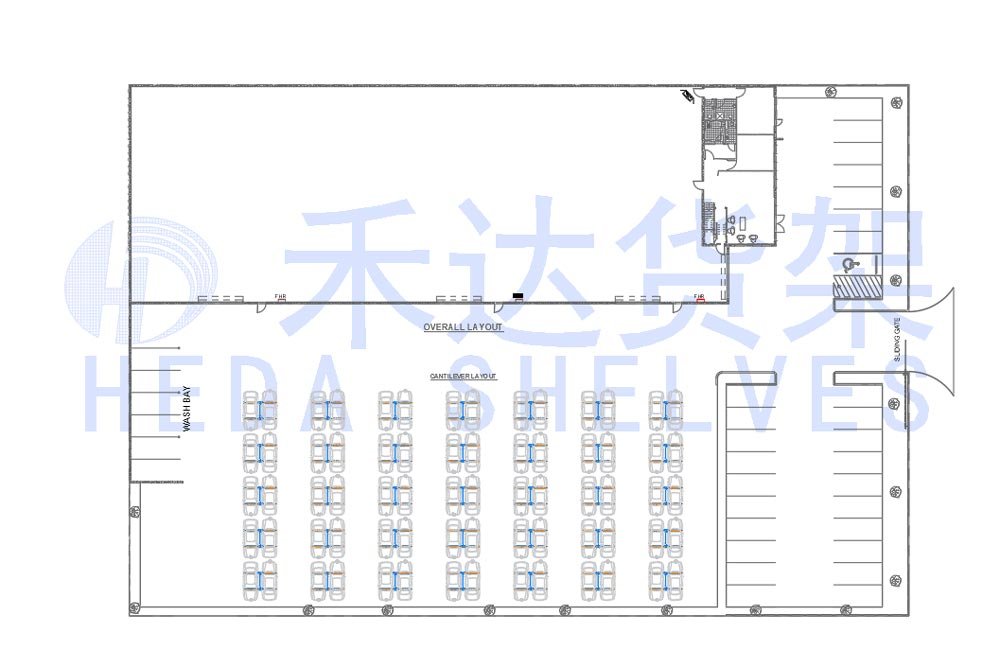
The direct impact of spatial configuration on fiscal performance.
The logic connecting facility layout to the balance sheet is both measurable and profound. Within modern logistics, labor costs typically represent the largest variable expense. Suboptimal workflows frequently lead to “redundant motion,” where personnel expend significant energy on non-value-added travel. By re-engineering the spatial logic to prioritize high-speed pick paths, enterprises can achieve a structural reduction in operational overhead.
Furthermore, with the cost of industrial real estate at an all-time high, every cubic meter must justify its presence. Effective design transforms static square footage into high-density assets, allowing for a higher SKU concentration without the need for facility expansion. This transition from “storing goods” to “managing density” is the hallmark of a high-performance 2026 logistics strategy.
Navigating the 2026 Logistics Paradigm: Scalability and Resilience.
The contemporary logistics environment demands a departure from rigid, permanent structures. Today’s facilities must be built for “flexibility-at-scale,” capable of absorbing seasonal fluctuations or shifts in product dimensions without requiring a total overhaul. The three pillars of this new paradigm are rapid throughput, modular growth, and uncompromising safety. Particularly in 2026, where labor regulations and OSHA standards have become more granular, the design must prioritize human-centric safety as a prerequisite for operational continuity.
Core Methodologies of High-Efficiency Spatial Planning
Successful warehouse engineering begins with an analysis of “Kinetic Flow”—the movement of goods through space and time.
Optimized Flow Topologies: U-Flow, Through-Flow, and L-Flow.
Selecting the right flow topology is the first step in eliminating operational bottlenecks. The following table breaks down these configurations through the lens of modern logistics requirements:
| Configuration | Operational Logic | Primary Advantage | Strategic Application |
| U-Flow | Inbound and outbound docks are co-located, creating a circular movement. | Maximizes dock utilization and centralizes security/labor monitoring. | Best for medium-volume sites with limited exterior access. |
| Through-Flow | A linear path from receiving at one end to shipping at the opposite end. | Eliminates the risk of cross-traffic and reduces congestion during peak hours. | Necessary for high-velocity cross-docking and large-scale hubs. |
| L-Flow | A 90-degree transition between receiving and shipping zones. | Provides physical segregation between inbound and outbound functions. | Ideal for irregular building shapes or specialized processing hubs. |
Predictive Slotting: Beyond the Pareto Principle.
While the 80/20 rule remains a baseline, 2026 designs utilize “Predictive Slotting.” This involves placing inventory not just based on historical speed, but on anticipated demand signals. By establishing “High-Velocity Corridors” for the top-performing SKUs, facilities can reduce the cumulative travel distance of the picking fleet by more than half, directly translating to faster order fulfillment.
Mastering Volumetric Efficiency: The Clear Height Strategy.
In the current market, “Square Footage” is a deceptive metric. The true measure of capacity is the “Clear Height Utilization.”
Volumetric ROI = (Utilized Cubic Volume / Total Theoretical Volume) x 100
To maximize this, designers are increasingly deploying narrow-aisle configurations and multi-tier structural mezzanines. This “vertical-first” approach ensures that the facility utilizes every inch of the air rights, effectively doubling or tripling storage capacity within the same land footprint.
Engineering Specialized Storage Solutions for Diverse Demands
Racking systems in 2026 are specialized tools designed for specific inventory profiles.
Selective Systems: The Cornerstone of High-SKU Environments.
Selective Pallet Racking remains the most flexible option for facilities managing a diverse range of products.
- Operational Logic: Offers immediate, unhindered access to every single pallet position.
- Best Use Case: Facilities that require high SKU granularity and frequent, small-scale picking.
- Financial Profile: Low entry cost with high flexibility, though it requires the most aisle space.
Double-Deep Configurations: Optimizing the Density-Access Ratio.
By positioning pallets two-deep, this system strikes a balance between pure density and operational speed. While it follows a LIFO (Last-In, First-Out) sequence, it significantly reduces the number of aisles required. For businesses managing large batches of identical products, this configuration offers a 30% density premium over standard selective layouts.
Dynamic High-Density: Drive-In and Gravity-Fed Solutions.
When volume outweighs variety, high-density systems become essential:
- Drive-In Racking: By allowing forklifts to operate inside the racking structure, this system maximizes floor space for storage. It is the preferred choice for cold storage where temperature-controlled volume is at a premium.
- Gravity Flow (Live Storage): Utilizing inclined roller tracks, pallets move autonomously from the loading face to the picking face. This creates a natural FIFO (First-In, First-Out) flow, making it critical for perishable goods or high-turnover consumer items.
The Technological Inflection Point: Automation and Autonomous Systems
The 2026 warehouse is a hybrid environment where human intuition meets robotic precision.
Radio Shuttle Technology: The Evolution of Deep-Lane Storage.
Radio Shuttle systems represent the bridge between manual and fully automated storage. A semi-automated shuttle handles the deep-lane movement within the racks, freeing the forklift operator to focus solely on dock-to-rack transfers. This significantly increases “Picks Per Hour” while minimizing the risk of racking damage from forklift impacts.
Integrated AS/RS: Reaching the Peak of Precision.
Automated Storage and Retrieval Systems (AS/RS) are the gold standard for high-performance hubs. Using high-speed stacker cranes or 4-way shuttles, these systems operate in environments that are often too tall or too dense for human-operated machinery. AS/RS eliminates “search time” and human picking errors, providing a level of inventory accuracy that approaches 99.9%.
Designing for Autonomous Mobile Robots (AMRs).
The latest generation of “Cobots” and AMRs does not require physical barriers. However, the warehouse floor must be engineered to support them:
- Digital Mapping: Layouts now include “Virtual Highways” designated via software rather than physical tape.
- Environmental Uniformity: Consistent floor leveling and high-strength concrete are required to prevent sensor calibration issues in autonomous fleets.
Mitigating Operational Risk: Safety and Regulatory Compliance
In 2026, safety is treated as a core data metric rather than a checklist.
Structural Integrity and RMI/OSHA Alignment.
All storage structures must comply with the latestRMI (Rack Manufacturers Institute) and ANSI MH16.1 guidelines.
- Impact Resilience: Heavy-duty column protectors and end-of-aisle barriers are no longer optional; they are critical for structural longevity.
- Load Dynamics: Digital “Capacity Placards” must be integrated into the WMS (Warehouse Management System) to ensure no beam level is ever overstressed.
Intelligent Visual Management and Lighting.
Modern design utilizes “Active Safety” features. This includes LED-projected walkways that change color when a forklift is approaching and intelligent lighting systems that illuminate only the active picking aisles, reducing worker fatigue and improving situational awareness.
Sustainability as a Performance Metric
The “Green Warehouse” of 2026 is driven by both environmental responsibility and cost reduction.
- Energy-Synchronized Lighting: Integrating motion-tracking LEDs with daylight harvesting can reduce energy consumption for lighting by up to 75%.
- Circular Construction: Specifying modular, bolt-together racking systems ensures that the facility can be reconfigured or relocated without generating significant steel waste.
Assessing Performance: Data-Driven Design Metrics
To validate the success of a warehouse redesign, 2026 managers focus on two primary KPIs:
- Density Factor: The ratio of usable storage positions to the total facility volume.
- Throughput Velocity: The speed at which an item transitions from receiving to final dispatch.
By utilizing digital twin simulations prior to installation, businesses can identify “hot spots” of congestion and resolve them in the virtual world before a single pallet is moved.
Summary: Future-Proofing Your Logistical Infrastructure
The competitive landscape of 2026 belongs to those who view their warehouse as a strategic asset. From selecting the right flow topology to integrating autonomous shuttle technology, every decision must be grounded in data and designed for scale.
Final Strategic Checklist:
- Verify that the flow topology matches your current order profiles.
- Evaluate the ROI of vertical expansion vs. horizontal growth.
- Ensure all structural components meet the latest safety and seismic mandates.
- Plan for the integration of robotics, even if full automation is a future goal.
By aligning your facility’s physical design with your long-term business trajectory, you ensure that your supply chain remains resilient, efficient, and ready for whatever the market demands next.