
For those managing consolidation hubs, “efficiency” represents a multifaceted puzzle. It involves more than just grouping shipments into a single vehicle; it is about orchestrating items from diverse origins, arriving at different times and in varying formats, into a seamless symphony of movement. True cost savings are hidden within the minute details of cargo handling. Often, a traditional, static warehousing mindset acts as an invisible barrier preventing meaningful progress.
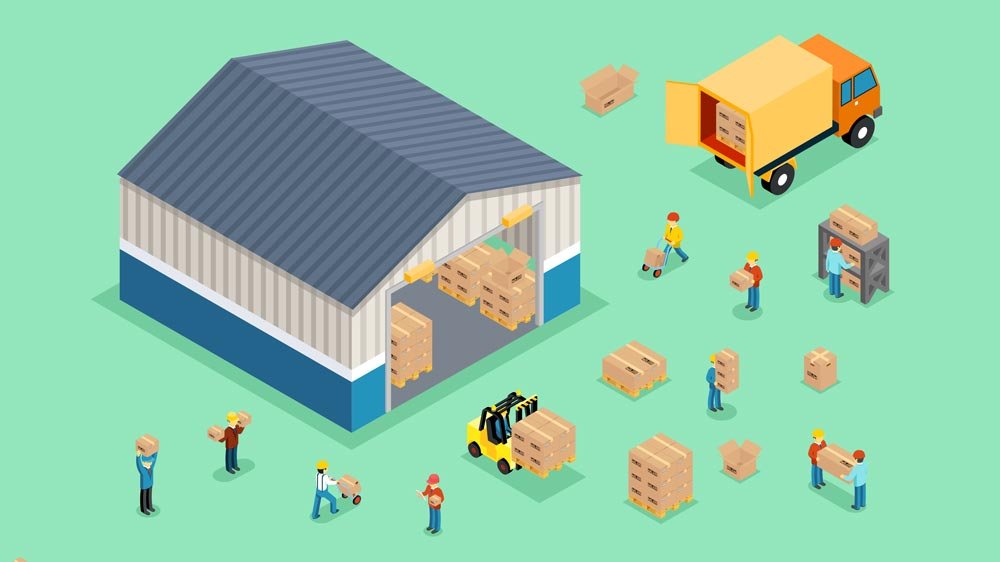
Three Structural Bottlenecks in Consolidation Efficiency
To build a superior consolidation center, one must look beyond the basic definition of “merging shipments” and address the underlying structural flaws caused by poor physical design.
The Price of Inertia: Excessive Cargo Dwell Time
The greatest drain on resources is the unnecessary storage and searching for goods within the facility. For instance, consumer products arriving from overseas might sit in a storage zone for days waiting for complementary shipments, while smaller local loads arrive and require staff to navigate massive aisles to find the matching items. Every additional touch—be it put-away, picking, or repositioning—drives up labor costs and the risk of error. The root cause is typically a layout designed for long-term storage rather than rapid turnover.
The Complexity Crunch: Non-Standard Goods vs. Rigid Systems
Modern supply chains handle an incredible variety of products. You might manage long construction materials one day and tiny electronics or apparel the next. Traditional racking with fixed heights and uniform weight capacities often fails this diversity, either wasting vertical space or creating safety hazards. This mismatch forces operators into inefficient workarounds, such as floor stacking, which slows down the entire operation and compromises safety.
The Surge Test: Fixed Capacity vs. Elastic Demand
Whether it’s a holiday shopping season or a localized promotion, peak demand tests the resilience of any consolidation center. Facilities built on rigid rack and aisle configurations often become gridlocked during these periods. Temporary overflow stacking is not just dangerous; it drastically reduces throughput speed. This physical inflexibility prevents the warehouse from scaling smoothly with business fluctuations, turning the facility into a growth bottleneck.
These challenges lead to one conclusion: improving efficiency isn’t just about better software or more staff; it requires a fundamental redesign of the physical environment where these processes occur—the storage systems and spatial layouts.
Designing a Storage Ecosystem for Dynamic Flow
To overcome these hurdles, a warehouse must transform from a “storage site” into a “high-velocity processing hub.” This means every design choice must prioritize the straight-line speed of goods moving from receiving to shipping.
Revolutionary Functional Zoning: From Linear to Parallel Processing
Traditional U-shaped or L-shaped workflows may no longer be adequate. Modern hubs should adopt zoning that better reflects their operational needs:
- High-Speed Cross-Docking Zone: Located immediately adjacent to receiving docks, this area should feature modular, mobile racking that can be rearranged quickly. This is ideal for pre-scheduled consolidations where goods are “touched once” and loaded onto outbound trucks within hours, bypassing storage entirely.
- Intelligent Dynamic Buffering: This is the heart of consolidation. Utilizing high-density, adjustable narrow-aisle racking or automated storage systems allows for efficient temporary staging. The key is balancing retrieval speed with storage density to ensure any shipment can be located and moved instantly.
- Agile Integration and Packing Hubs: These areas should be designed with ergonomics in mind. Using flow-through racking or vertical lifts to bring packaging materials and components directly to the operator creates a workstation where merging, verifying, and packing happen in one fluid motion, eliminating wasted steps.
Core Attributes: Ultimate Flexibility
When dealing with unpredictable inventory and volumes, the storage hardware itself must be adaptable.
- Physical Adaptability: Invest in modular systems where shelf heights, depths, and weight capacities can be adjusted without specialized tools. This allows a storage slot to hold small electronics in the morning and be reconfigured for oversized furniture by the afternoon.
- Layout Reconfigurability: By using standardized components, the entire warehouse floor can be reimagined as business needs shift. For example, a storage section can be quickly converted into a temporary cross-docking zone to handle a sudden surge in shipments.
Laying the Physical Foundation for Tech Integration
Automation and data systems don’t exist in a vacuum. Their success depends on a structured, predictable physical environment.
- Aisle widths and height tolerances must be precisely aligned with the navigation requirements of AGVs (Automated Guided Vehicles) or AMRs (Autonomous Mobile Robots).
- Racking structures should include pre-defined mounting points for IoT sensors, RFID readers, or computer vision tags to allow for real-time visibility.
- A well-planned physical layout ensures that digital commands from WMS (Warehouse Management Systems) are executed without friction. The alignment of physical and digital assets is the true driver of overall performance.
A Forward-Looking View: Efficiency as Sustainability
Operational improvements are also tied to environmental responsibility. Optimized storage solutions are inherently “green”:
- Space as a Resource: By using narrow-aisle or automated high-density systems, you can significantly increase capacity within the same footprint. This reduces the need for new construction or additional leasing, directly lowering energy use and carbon emissions.
- Durability and Lifecycle: Choosing high-strength, recyclable steel racking with eco-friendly coatings ensures a long service life. These systems fit perfectly into a circular economy, minimizing waste.
From Blueprint to Reality: A Conceptual Leap in Value
Consider a hypothetical case: A logistics provider serving cross-border e-commerce often suffers from congestion during sales peaks and slow returns processing.
The Optimization Strategy Focuses on Storage Transformation:
- A dynamic pre-processing zone using mobile carts and gravity racks is established near receiving to quickly sort goods: cross-dock items move immediately, while others enter the intelligent buffer.
- The core storage area is upgraded to adjustable narrow-aisle pallet racking with RFID-equipped forklifts, drastically improving inventory accuracy and retrieval speed.
- A dedicated returns processing area is built with lightweight shelving, allowing returns to be processed and put back into inventory within 24 hours.
- A light-duty overhead shuttle system is deployed to move small, high-value items between zones at high speed.
Expected Outcomes: This storage-centric transformation aims to reduce average order processing time by over 30%, increase peak throughput by 50%, and push inventory accuracy to 99.9%.
Conclusion
Ultimately, the competitive edge of a consolidation warehouse lies in its physical infrastructure. It is not just about buying shelves; it is about investing in an intelligent storage ecosystem that turns space, time, and labor into a reliable advantage. When goods can flow through your facility without friction, you provide your customers with the irreplaceable value of speed and reliability.